A Mostly Helpful Guide to Running Your First Ultra Trail Race
Some people who have been running marathons for a while will stop and say, “This is fun, but is there something else?” and others will say, “This sucks, is there something else?”
Either way, they will probably hear about “ultramarathons,” where you run further but also slower for a longer period of time. Oh, and you can eat grilled cheese and drink Coke while doing so. Not a bad way to entice people interested in this small but growing niche sport.
Technically, an “ultramarathon” means any race longer than 26.2 miles, but in reality, a 50K (31.0686 miles) is the true beginner-level ultra. I’ve never seen a 27-mile race. If one exists, I wouldn’t do it. It feels like cheating if you want to say, “Hey, I did an ultra.”
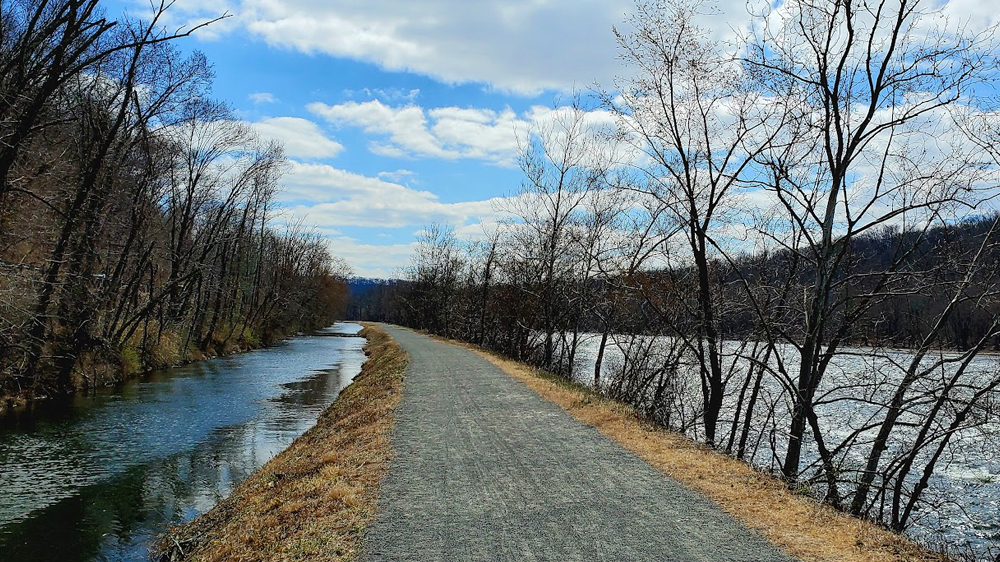
While there are many road ultras, trail ultras seem to be more popular in my area (Southeastern Pennsylvania). Running on a trail for an extended period can be a welcome change from running through cities, pounding the pavement, and dodging traffic. But beware, if you look up for too long while on the trail and make the mistake of taking in all the beautiful nature around you, a rock, a root, or a rut will trip you, and most likely you will fall.
This is not to dissuade those eager to hit the trails! I’ve been running trails for a good while now, and I don’t fall a lot, but when I do, I make sure it’s directly in front of people. The pros of running through the beautiful, tree-lined paths and up and down hills and mountains, while breathing in fresh air, far outweigh the cons of a possible stumble or two. Like most endeavors, you need to train for it and learn how to do it.
And it’s fun. I want you to do it.
Tips for the Beginners
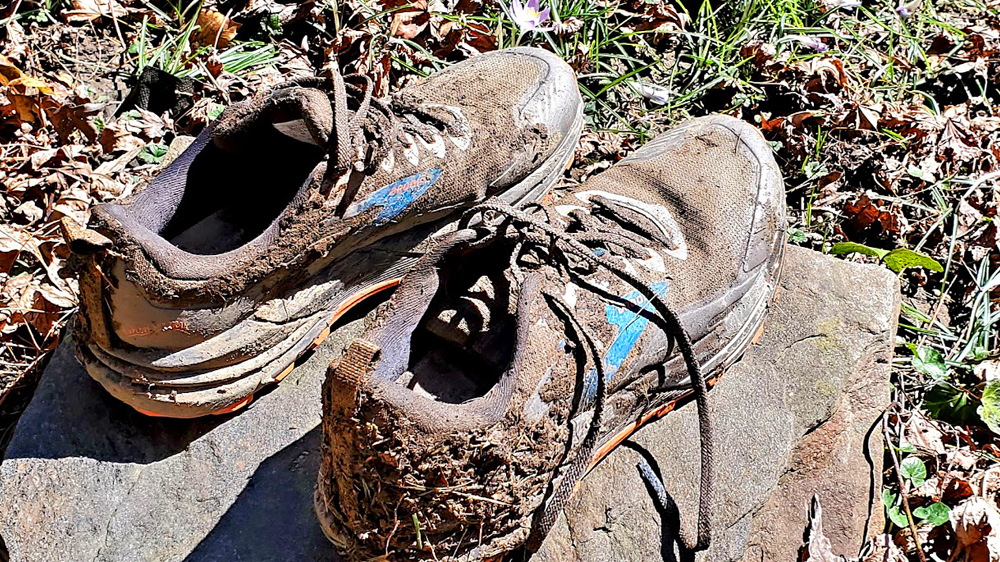
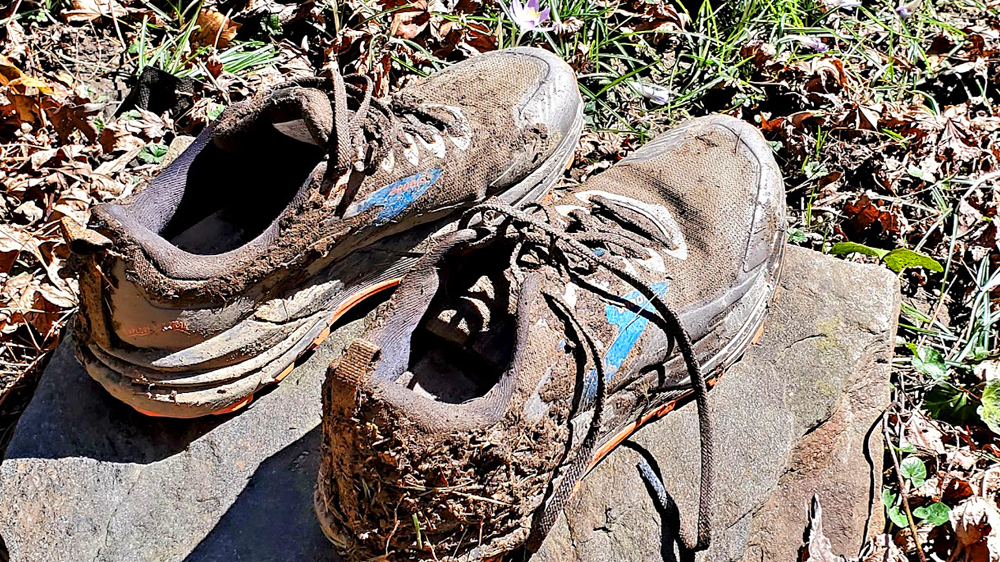
Get a pair of trail shoes. You can go to a running store, but I prefer to visit an REI or an outdoorsy-type store that has hiking boots and gear. They usually have a larger selection of trail shoes, and the staff knows their stuff. Trail shoes have lugs. They grip the ground and help keep you stable and upright. They are a must for any terrain that is the least bit “technical” (pointy and jagged things on the ground). Don’t worry about how they look; they will be covered in mud, dirt, and deer/dog poop soon enough.
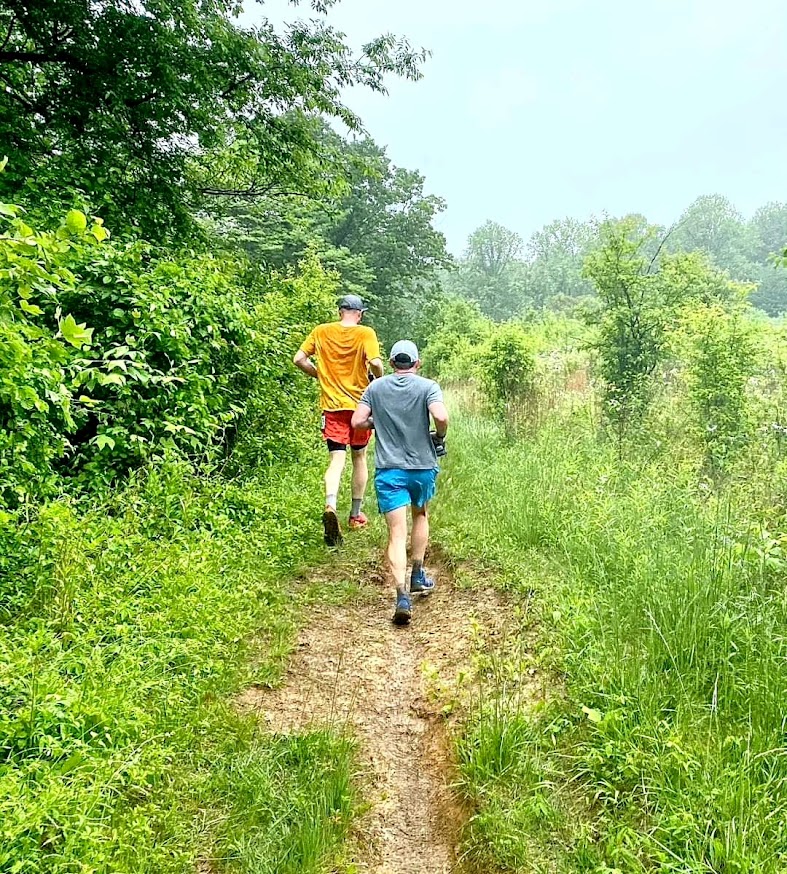
First, go for a walk or jog slowly on a trail for a couple of miles. Keep your eyes down and slightly ahead, looking for obstacles (aforementioned rocks, roots, ruts). After a few times out, you will become good at this. Stepping around pesky things and picking the right path becomes second nature. It’s like a video game, but you are avoiding things instead of trying to kill things.
If you find yourself enjoying this type of trail-based locomotion, proceed with the following:
Get a vest. You will need to carry water bottles, nutrition, your phone, and maybe extra layers and gloves, so get a good, snug vest. It will feel a bit unwieldy at first, and you might feel silly, “Look at me, carrying all this important stuff around in the woods!” but that’s part of this new woodland activity you are undertaking. After a few miles, you get used to it, and it is super handy. “This pocket is for gels, and this pocket is for candy.”
Train your gut. To complete a very long run and feel okay during and after, you need to give your body enough fuel, but not too much fuel, because that can make your fickle baby tummy hurt. It takes a bit of practice to figure it out. You will need to ingest gels, water, electrolytes, and salt tabs to keep your body moving.
I wrote about eating during a race here. Keep track of what mix of nutrition works for you during your long training runs and repeat that during your race. Keep in mind, you should also eat real food during a race (you will tire of gels eventually), and most of what is provided at the aid stations is quite yummy. “Okay, I’m starting loop two of this 50K. I’d better fill my bottles and get a cup of French fries for this first climb.”
Train your climbing legs. In addition to running the flat and flowy sections of trails and running paths during training, find a hill and hike up and down that hill over and over. Do this once a week. These climbs and descents are called “hill repeats” and “vert work.” They are very necessary for your success in completing a trail race.
When you look at a race description, you will see “total elevation” or “elevation gain/ascent.” This is the sum of all uphill climbs during a run. It is a good measure of how difficult a race will be. For example, the Naked Nick 50K in Leesport, PA, has about 2,800-3,000 feet of total elevation gain. I think this is a great 50K for a first-time participant.
After a few weeks of going up and down, you will become stronger, and you will feel your quads become stronger. “Oh, hell yeah, I now have quads!”
Descending on non-technical hills is a blast; it’s called “bombing down the hill,” and it makes the climb up worth it. If the descent looks sketchy, take your time; you can always pick up your pace again on the flatter parts of the trail.
I was cooked halfway through my first 50K because I did not have the proper strength and endurance for the hills. I finished, but boy oh boy, I was hurting. Before my next 50K, I did hill repeats twice a week for a few months, and it did wonders. Hill repeats are now oddly fun for me, and I look forward to them.
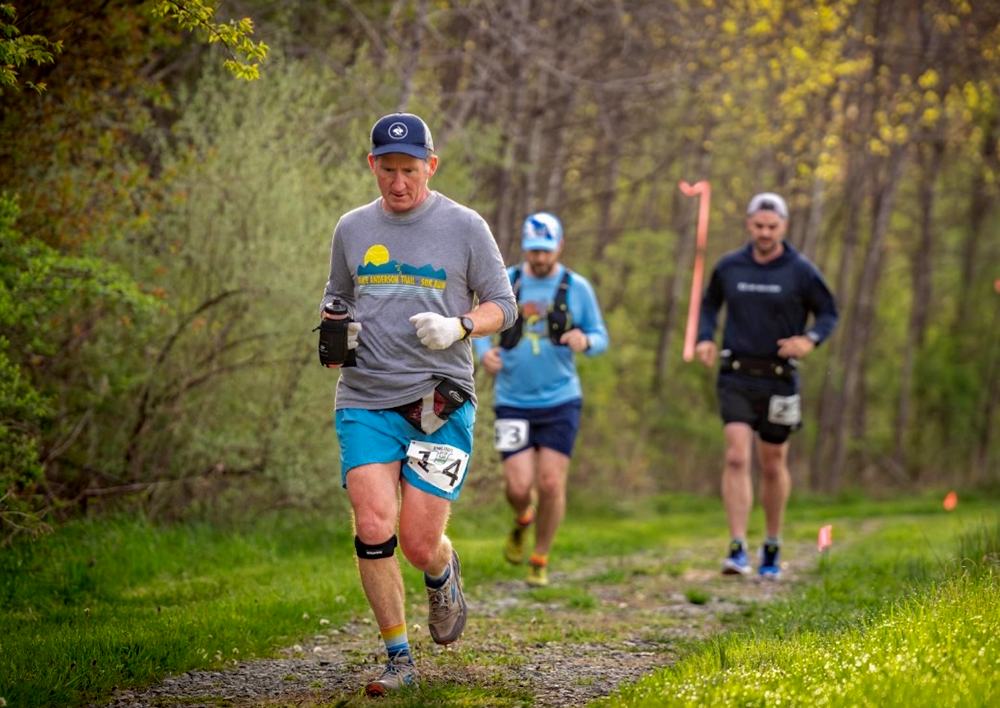
Train your body to run for a long time at a slower pace than you are used to. Go slower than your marathon training days and add more miles every week. Add road miles, short runs, hill repeats, basically anything and everything to keep things interesting and fun, but make sure you go on one long run every week.
The popular 80/20 rule for training works for most people. 80% of your training time should be running at an easy, conversational pace, and the other 20% at a moderate to hard intensity.
Also, rest is super important. A big side benefit of training is that you will be very tired after your long run, and you will feel very good, in a mellow way. It is a wonderful stress-reliver and it will help you fall asleep and sleep soundly.
I can’t tell you the specific number of miles a week you should do or a specific training plans; this will differ with the individual, and this is where a good coach or an online plan will come in handy.
- Sample Training Plan: Hal Higdon Ultramarathon 50K Program
- Coaching: For ultra training, Patrick at Bouncing Soles is your guy. For road and general running coaching, Gerard at Sweat Equity Running is your guy.
For a 50-mile trail race I just finished in October, I averaged 40 to 50 miles a week of both trail and road running. This is probably not high volume for many, but it works for me as an older guy in his 50s who is trying to stay injury-free and have a good time while I’m doing it. I am way too old to push anything to the limit.
Join a trail running group. I train alone because I run at random times, but I know many friends thrive running in a group. This works well for trail running, where you can easily pick up tips and gear recommendations while enjoying a few miles with others. Also, you can talk shop with them instead of telling your family your new hydration plan while they pretend they need to get something in the kitchen.
Chasing Trail and Pagoda Pacers are two fun groups in the Greater Philly/Reading area.
Do a shorter trail race first. There are many fun sub-ultra trail races out there. Search for a race here. Also, make sure there is not a ton of elevation in your first race, but also make sure there is some. It’s good to get a taste of the ups and downs of a typical trail course.
Sign up for a 50k. After a shorter race or two, you will know if this is for you. The vibes at these races are almost always positive and nurturing. There are serious trail runners who are fast and will be at the front of the pack, but for the most part, no one is talking about PRs or pace or lactic threshold (I have no idea what that is). You will find a good number of first-timers at every race.
Ultrarunning.com has a great website for finding races in your area. Read the descriptions of the races, and most give a pretty clear picture of what type of race it is. For your first go at a 50K, I would avoid any elevation rating of “very hilly.” Look for races that say something like, “Suitable for first-time ultra runners as well as seasoned runners,” and avoid races that say, “This race will destroy you.”
Tips to Reduce the Pre-Race Stress
So, you signed up for a race and trained for it. This is more than half the battle. Remember, this is supposed to be fun as well as a challenge. There are many things you can do to reduce the stress and uncertainty involved with tackling this task.
I would avoid posting about your intent until after you do it. Not to be a Negative Ned here, but there is a chance you will not succeed at first. And that is fine. This is hard stuff, and if you DNF (Did Not Finish), you will be bummed for a bit, but you will also learn a ton from it and know what you need to do next to crush this thing. Having to explain to people what went wrong just adds to it. If you are a person who likes this extra motivation, I get it. It’s just one less thing to worry about for me.
Like your road races, prepare everything before the race. Lay out your clothes and gear the night before. Organize all your nutrition and pack your vest with everything you need. Remember, they will have water and electrolyte drinks and real food at each aid station. Aid stations are usually 4 to 6 miles apart, but it is always good to check the race website to see where they are located so you can plan. If you are driving to the race in the morning, look over the directions many times. See where you should park. Get there early.
Don’t eat or try anything new before the race. After you have trained for a few months and you know what works, go with that! Don’t get adventurous with a new gel or drink mix before the big show. If a nice plate of pasta the night before a long run, with a bagel in the morning, works well for you, go with that on game day. I eat a LOT of pizza the night before. Pizza makes me happy, and when you’re happy, you are a little less stressed.
This is something you trained for, so enjoy it. When you start stressing, just remember you put in the work, and you are prepared. Take what the day gives you.
Good Things about Trail Races
I hope this is getting you excited to try one of these events. I’m not very competitive, but I love trail race events. It’s a chance to be outside for a long time on an awesome course with nice people and not have to carry everything and worry about having enough water. Most trail races are looped, so you can have a bag with your stuff if you need to replenish supplies or change shoes or a shirt. Another fun thing about trail vs. road…
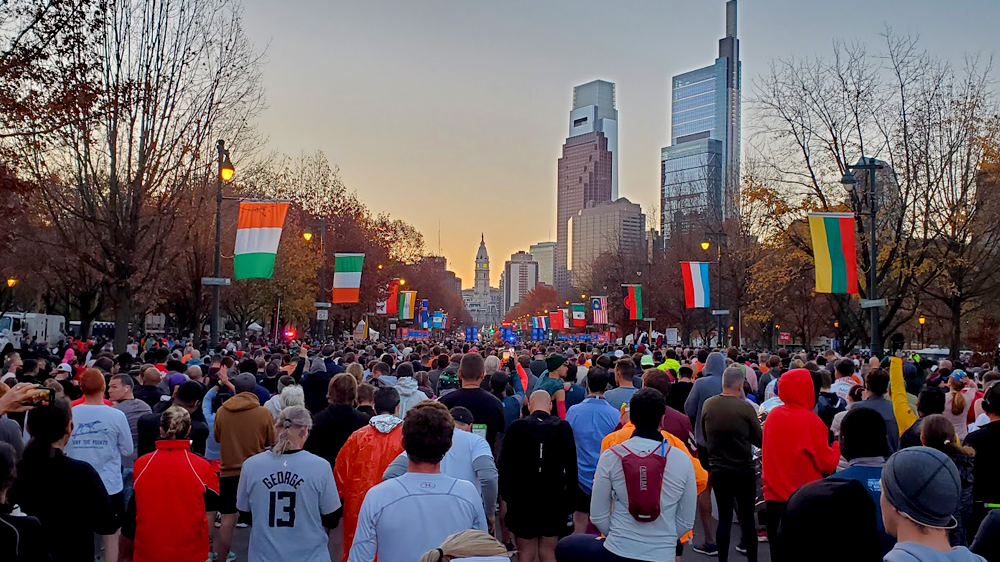
The last few road marathons I’ve done were very time-consuming, and I am tired of doing the following:
- Going to a very crowded expo the day before to pick up my bib.
- Parking miles away the morning of the race.
- Getting to the race two hours early to enter the race area.
- Standing in line for a porta-potty for half an hour.
- Standing in line for the bag check.
- Standing in the corral with thousands of people, freezing for another half an hour.
Most Trail Races I do:
- Get there an hour early and pick up my bib.
- Park about 50 yards from the start line.
- Go to the bathroom as many times as I need to. The lines are usually chill.
- Chat with the volunteers who are incredibly helpful and cheery, super early in the morning (and throughout the day).
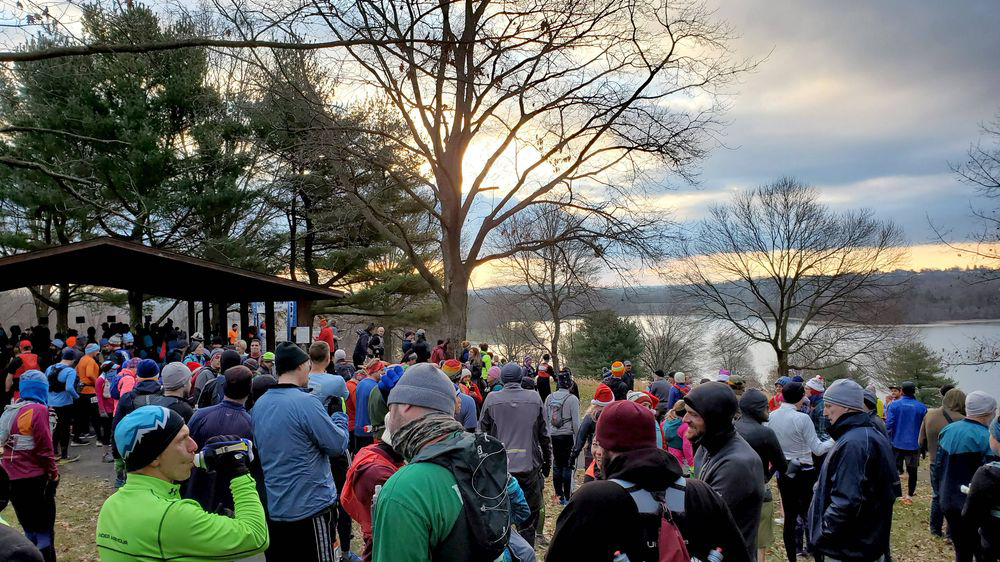
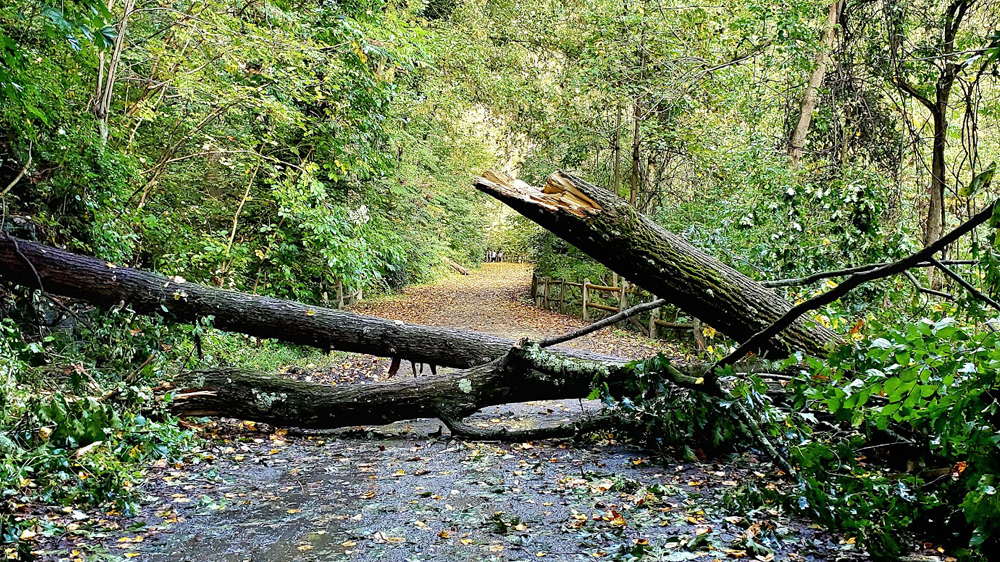
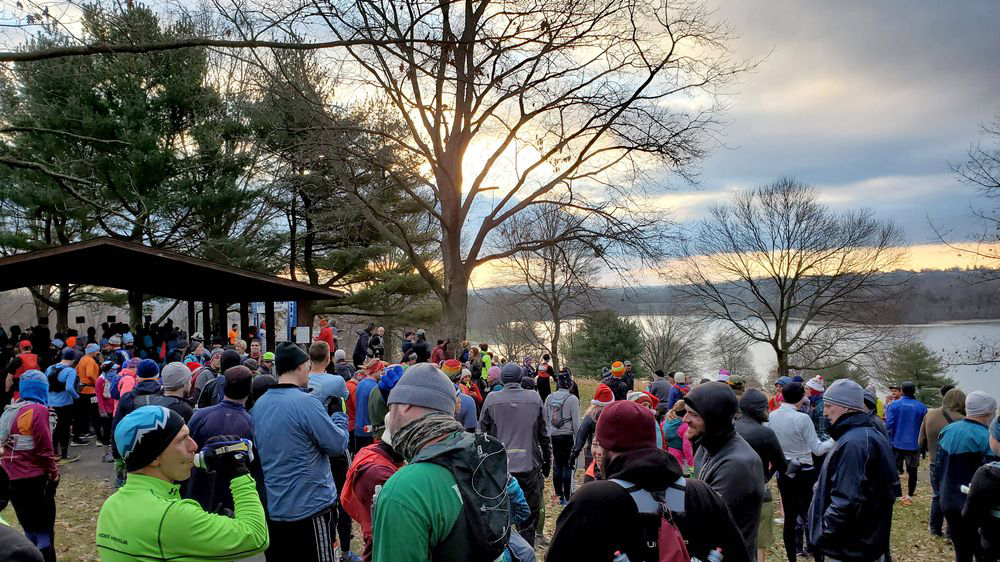
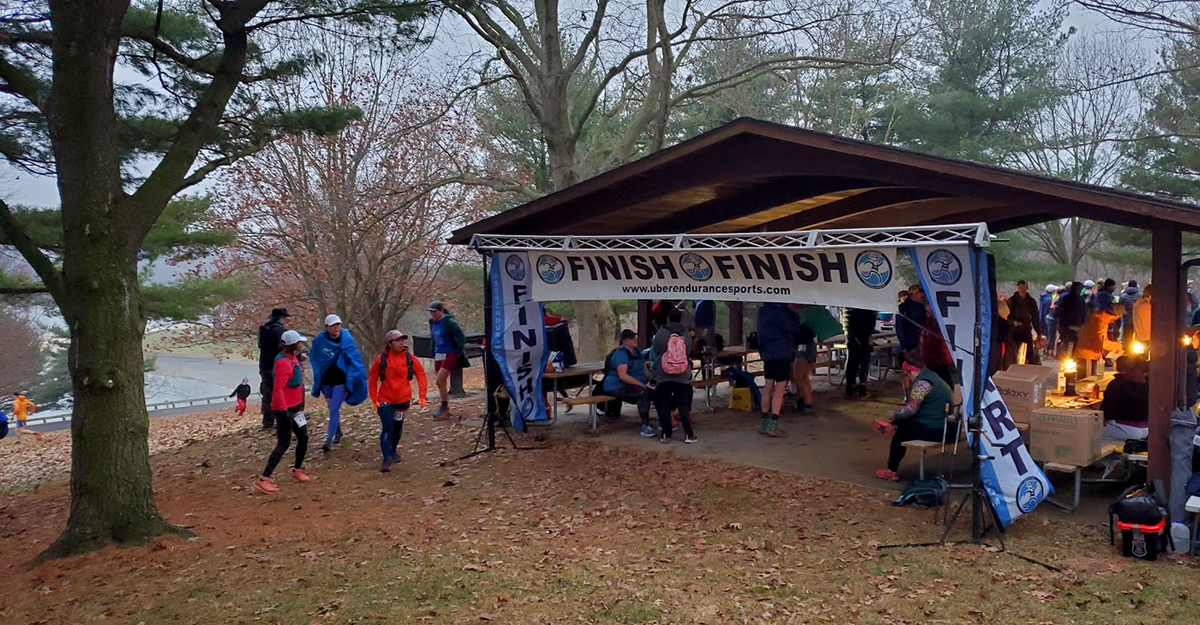
- Walk to the start line with a few hundred others about five minutes before the start, and you’re off after a few encouraging words from the Race Director: “… oh, one last thing, a couple of trees fell at mile 11, good luck.”
Race Day
You are going to do great! Here are a few last words that I hope will help you through this trek.
Wake up early, get your poops out.
Go to the race, poop again.
Pin your bib to your shorts because you might change shirts or add layers.
Start the race slowly. You won’t, but you should. It’s exciting, and you get caught up in it, but try to stick to the pace that got you there. I am a negative split guy. I always go out a little slower at first because it is a long day, and if you are feeling good in the second half, you can pick up the pace.
Don’t think about how many miles to the finish. Just think about the next aid station. Think about the race in small, doable segments. Chunk it out.
If you have run a half-marathon or longer, or maybe on one of your long runs, you might have hit a nice “flow state,” where you forget about the task at hand and the miles peel off effortlessly, and it is incredibly satisfying. Hopefully, you will experience this because that is what solid training does for you. I usually get to this point after 20 miles.
If you are hitting a low spot, and there will be low spots, chat with another runner if they are receptive. Miles can go by quickly while you are conversing.
Treat yourself to some Coke. It’s magic.
Stomach not feeling great? Put the gels away and try different real foods. Oranges are awesome. A handful of gummy bears is a well-earned reward.
Again, there will be highs and lows. Just keep moving. One foot in front of the other. Walk for a while. You can do it.
The adrenaline and feeling of accomplishment you get when you hear the finish line noise (cow bells, music, clapping) is incredible. You’re usually in the woods, so you will hear the finish line before you see the finish line. I tear up every time I cross it, sometimes in pain, but mostly because I am so damn happy.
Have Fun and Keep It Fun!
Like most activities, from pickleball to golf, runners can be annoying when talking about running, especially ultras. It’s important to have a good sense of humor about it.
I recommend following @yaboyscottjurek on Insta, who loves to keep everyone, pros and novices alike, in check.
I also post about the trails on Insta at @phillytrailrunners.
Hope this is helpful. Let me know if you have any questions or tips (comment below).
I enjoy being outside and running on trails and sometimes I enjoy being online. More >